
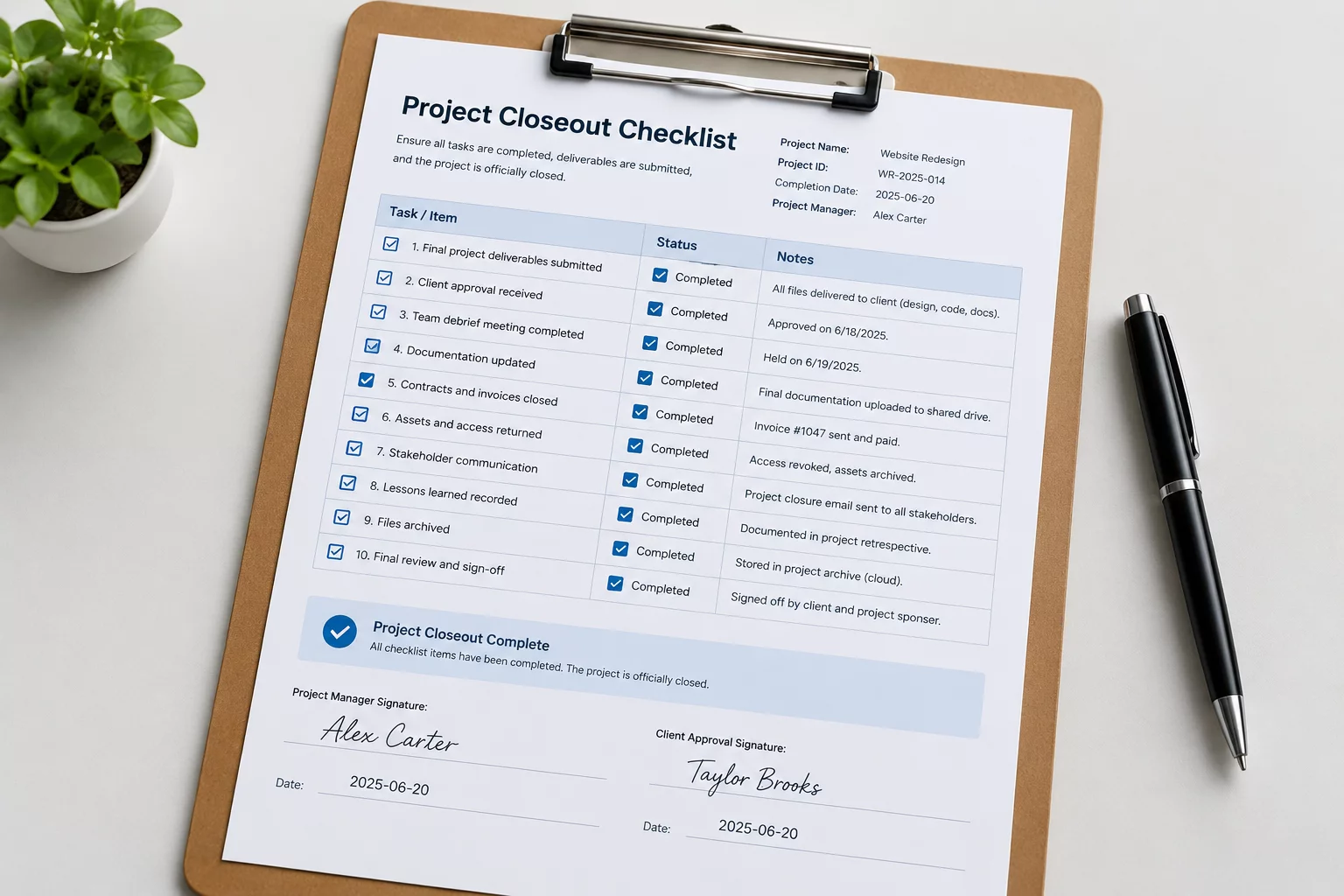
Project conclusions frequently leave behind uncontrolled file volumes, unassigned scratch spaces, and untracked cloud shares. The Project Closeout Worksheet provides systems administrators, storage engineers, and project leads with a documented procedure to evaluate stored assets, capture storage purpose documentation, and prevent inactive shares from consuming Tier-1 enterprise storage indefinitely.
Establishing Clear Retention Triggers at Project Milestones
When a business initiative terminates or delivers its final release, team members transition to new obligations while their working shares remain unaltered on high-performance SAN or NAS arrays. By conducting a formal data retention review at the moment of handover, IT teams can establish definitive expiry deadlines rather than allowing directories to become unowned legacy data. Incorporating external analysis findings into a TreeSize storage context allows engineers to visualize folder hierarchies, spot massive uncompressed binaries, and map ownership records directly against designated departments.
Every completed project volume must undergo a verified archive review and register complete storage purpose documentation before read-write permissions are revoked and access transitions to read-only cold vaults.
Step-by-Step Project Closeout Protocol
Executing a reliable closeout requires coordinated handoffs between the departing project manager and the IT storage administrator. The following actions ensure no compliance gaps occur during decommission staging:
- Audit workspace directories and isolate active production artifacts from intermediate build files, applying a comprehensive data retention review to each subfolder.
- Collate storage capacity consumption metrics within a TreeSize storage context to detect duplicate archives, log exports, and unneeded virtual disks.
- Complete formal sign-offs for final archive review, ensuring all statutory hold criteria and compliance retention timers are fully satisfied before tier migration.
Following the completion of these verification checkpoints, the collected storage purpose documentation is recorded inside central configuration management systems. This guarantees future infrastructure engineers can quickly verify why specific snapshots exist, who authorised their preservation, and the exact date when safe decommission can take place.
Auditor Log & Discussion
Verified PractitionersNo comments yet. Be the first to leave a comment.
Post Governance Observation
Submit documented storage policy notes, retention exceptions, or verification queries.